
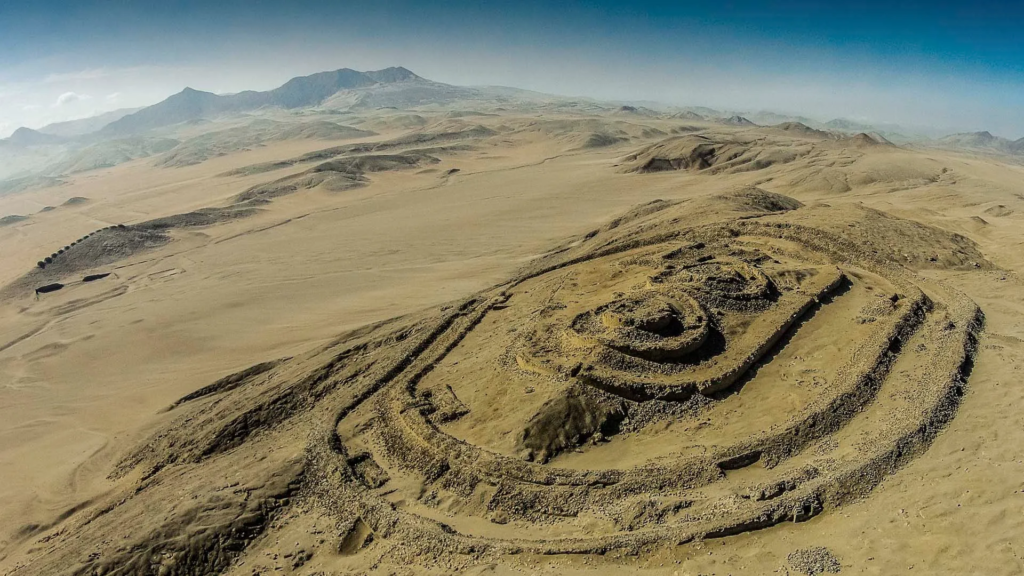
How do you track the Sun through an entire year without a clock, a calendar, or a single metal instrument? More than two thousand years ago, on a stretch of desert in northern Peru, people answered that question in stone. They built thirteen towers along a low ridge, chose two precise places to stand, and let the Sun itself do the rest. Today the site is called Chankillo in Peru, and it sits on a quiet hillside above the Casma Valley, with the Pacific a short drive away and almost no one around to notice it.
Quick Facts
| Detail | Info |
| Location | Casma Valley, �ncash region, north-central coast of Peru |
| Approximate age | About 250–200 BC (over 2,200 years old) |
| Known for | The Thirteen Towers, an ancient solar observatory |
| Recognition | UNESCO World Heritage Site, inscribed 27 July 2021 |
| Built by | Societies of the Casma Valley, long before the Inca |
| Experience type | Archaeological and archaeoastronomical site in a desert landscape |
Where Is Chankillo in Peru?
Chankillo sits in the Casma Valley, in Peru’s Ã�ncash region, on the arid coast north of Lima. This is not the Peru of mountain citadels and cloud forest. It is a desert landscape of pale hills and dry riverbeds, where the horizon is wide and flat enough that the Sun’s movement across it is easy to read. The town of Casma is the usual base for a visit, and the site lies a short drive from it.
The History of Chankillo
Chankillo belongs to the Early Horizon of Andean prehistory, roughly 250 to 200 BC, which makes it more than two thousand years old. It is worth repeating, because it surprises many travelers: this is not an Inca site. The Inca Empire rose well over a thousand years later. Chankillo was built by societies of the Casma Valley, who had developed a remarkably sophisticated understanding of the sky at a time when much of the world had not.
We do not know the exact year the towers went up, and it is more honest to say “around the third century BC” than to give a precise date. What we do know is that the people who built Chankillo designed the whole landscape, not just a single monument, around watching the Sun.
The Thirteen Towers
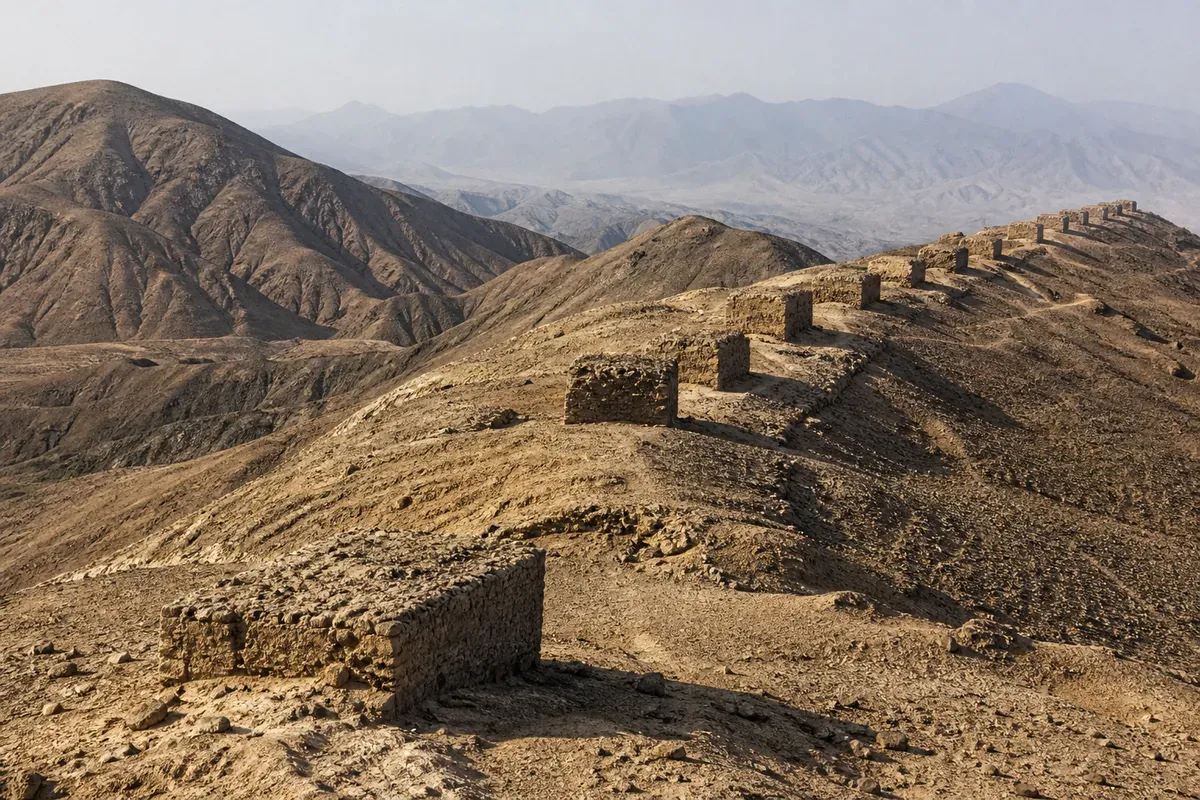
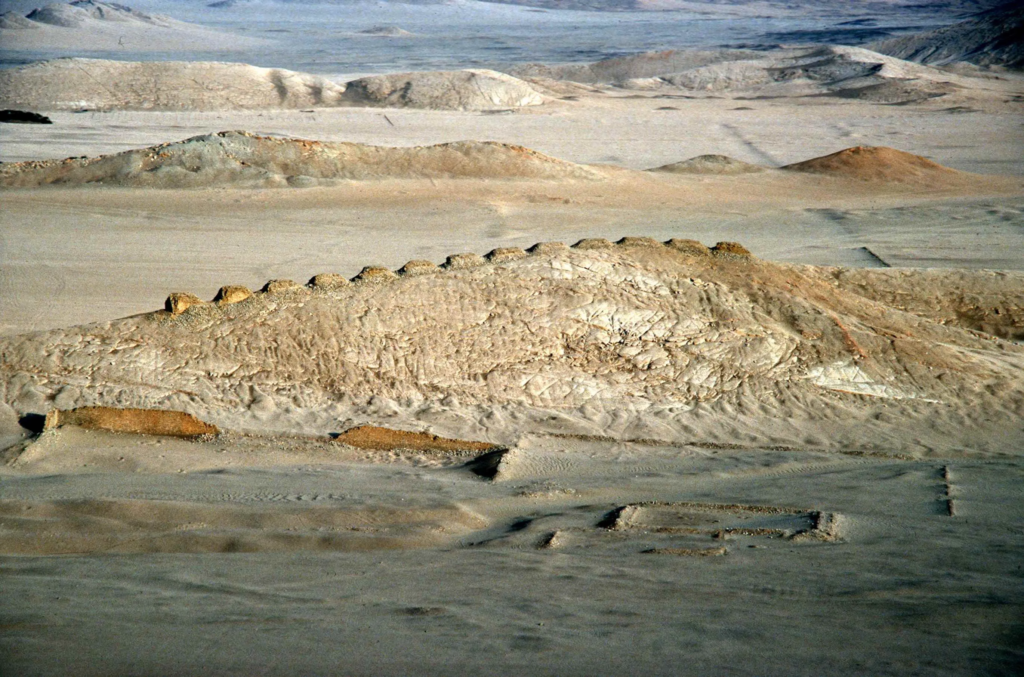
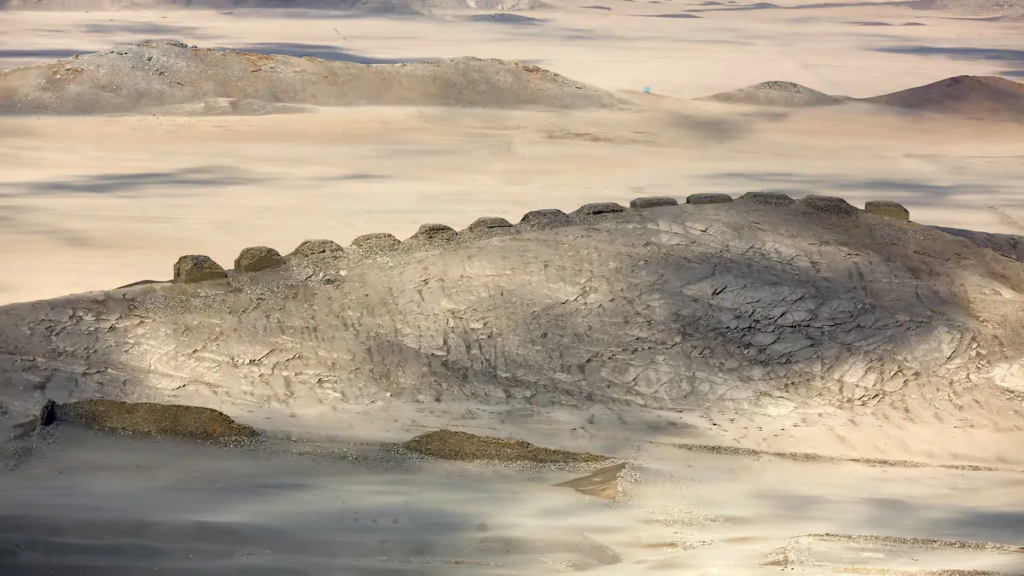
The Thirteen Towers are the heart of Chankillo. They are thirteen roughly cube-shaped stone structures, lined up from north to south along the crest of a low hill. Seen from a distance, they form a kind of jagged, artificial horizon, with towers and gaps repeating along the ridge like the teeth of a comb.
That shape is the whole point. A natural horizon is irregular and hard to use as a measuring tool. By building an artificial one, with regular, fixed reference points, the builders created something they could read precisely, day after day.
How Did the Solar Observatory Work?
The principle is simple, even if the engineering behind it was not.
The principle is simple, even if the engineering behind it was not.
The Sun does not rise or set at the same point on the horizon all year. Over the seasons, its position slowly moves along the horizon, north in one half of the year and south in the other. Chankillo’s builders placed two observation points on either side of the line of towers. From one, an observer looking toward the towers could watch the Sun rise behind them. From the other, an observer could watch it set.
On any given day, the Sun appeared behind a particular tower or in a particular gap between two of them. Because that position shifted gradually through the year, the observer could tell the time of year simply by noting where the Sun stood relative to the towers. The system could mark the solstices and equinoxes and many dates in between, with an accuracy researchers estimate at within a day or two.
Why Did Ancient People Observe the Sun?
A calendar is more than a convenience. In an arid coastal valley, knowing the time of year can matter for planning around water and seasonal activity. But the site was almost certainly about more than farming. Chankillo was also a ceremonial center, and researchers have long linked its observations to a solar cult and to a calendar that organized social and ritual life.
How much of that story is proven and how much is interpretation is an honest question. The evidence strongly supports the towers working as a calendar instrument. The finer details of who used it, how, and for what exact purposes are matters of scholarly interpretation, and it is more accurate to say Chankillo connected the observation of the Sun with the organization of time, seasonal activity, and ceremonial life than to claim a single function.
The Fortified Temple and the Rest of the Complex
It would be a mistake to think of Chankillo as only its towers. The complex includes a triple-walled hilltop structure known as the Fortified Temple, along with buildings referred to as the Observatory and the Administrative Centre, open plazas used for gatherings, and a natural landmark, Cerro Mucho Malo, which works alongside the towers as part of the observing system.
The name “Fortified Temple” can suggest a purely military building, but the architecture points to a mix of ceremonial, administrative, and defensive purposes. Treating it as a simple fort misses most of what makes the site interesting.
Chankillo and UNESCO World Heritage
In July 2021, UNESCO inscribed Chankillo on the World Heritage List, under cultural criteria (i) and (iv). It was the first property on the list to be inscribed specifically as an archaeoastronomical complex. UNESCO’s reasoning rests on what the site does as a whole: it is an outstanding example of ancient landscape timekeeping, in which architecture and natural features together allowed the time of year to be determined not on a single date, but across the whole seasonal year.
The site’s modern scientific story is just as striking. Although the towers had been known for a long time, their astronomical function was explained in a 2007 paper in the journal Science by archaeologists Iván Ghezzi and Clive Ruggles, which showed how the towers, viewed from two specific points, tracked the Sun’s annual path. Chankillo is often described as the oldest known solar observatory in the Americas, a claim best understood as “among the earliest known,” given how much remains to be discovered about the ancient world.
How to Visit Chankillo
Casma is the practical base for a visit, with lodging and restaurants in town, and the site lies roughly a half-hour drive away. There is little visitor infrastructure at the site itself, so it is worth arriving prepared: sun protection, water, and sturdy shoes matter in the desert, and mornings tend to be more comfortable than afternoons, when coastal winds pick up.
Opening hours, entry conditions, and access rules at archaeological sites can change, so confirm current conditions with the site’s management before you travel rather than relying on any single guide, including this one.
Other Places to Visit Near Chankillo
Chankillo pairs naturally with other sites in the Casma area. Cerro SechÃn is known for its carved stone reliefs of human figures and ritual scenes. Las Haldas is a coastal ceremonial complex beside the Pacific. The regional museum in Casma adds context on the societies that lived here, and nearby beaches make an easy coastal break. Not all of these are equally close or equally easy to reach, so it helps to plan the day around distances rather than a checklist.
What is Chankillo?
Chankillo is an ancient archaeoastronomical complex in the Casma Valley of northern Peru, famous for its Thirteen Towers, which worked together with two observation points as a solar calendar.
How old is Chankillo?
Roughly 2,200 years old, dating to around 250–200 BC. It is much older than the Inca.
Did the Inca build Chankillo?
No. It was built by societies of the Casma Valley more than a thousand years before the Inca Empire.
How did the Thirteen Towers track the Sun?
Observers stood at two specific points on either side of the towers and watched where the Sun rose or set relative to them. As the Sun’s position shifted through the year, so did its position against the towers, which revealed the time of year.
Is Chankillo a UNESCO World Heritage Site?
Yes. It was inscribed in July 2021.
Does each tower represent a month?
No. The towers are reference points on an artificial horizon, not a list of months.
Where is Chankillo?
In the Casma Valley, Ã�ncash region, on Peru’s north-central coast, a short drive from the town of Casma.