
Peru is a land of dramatic contrasts, ancient civilizations, and breathtaking scenery. Among its most extraordinary natural wonders are the Montañas de colores, a collection of vibrant mineral mountains that have become one of the country’s most photographed attractions. If you are planning a journey to the Andes and want to explore landscapes unlike anywhere else on Earth, this guide will help you understand everything about the Montañas de colores from how they formed to which one you should choose for your adventure.
¿What Are the Montañas de Colores?
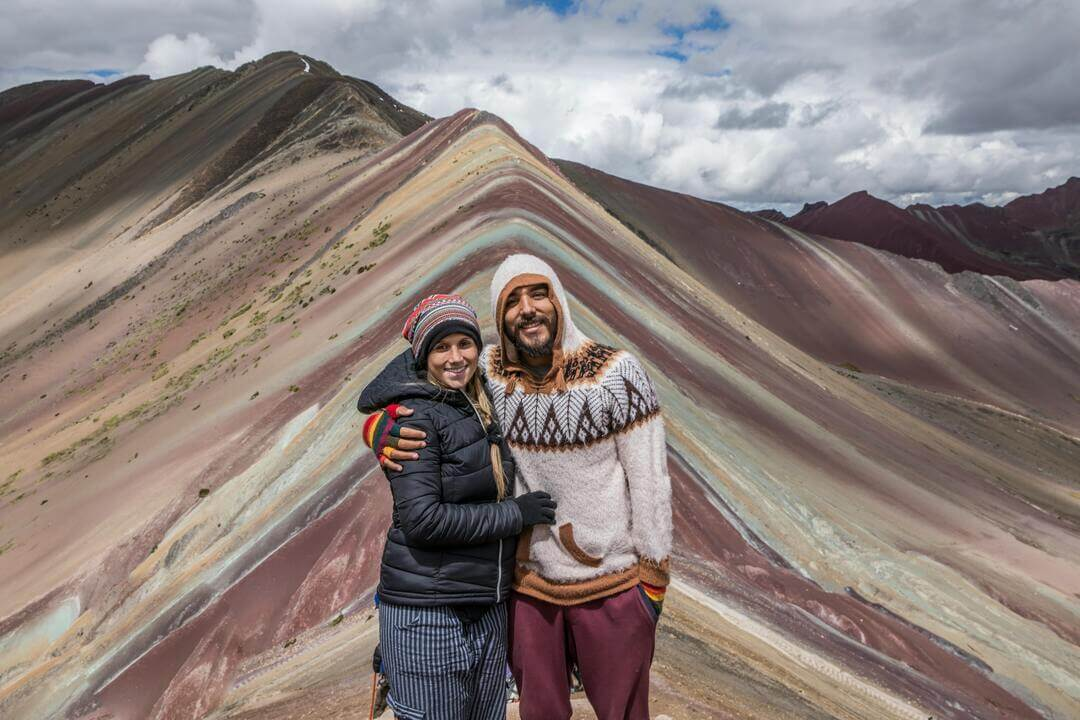
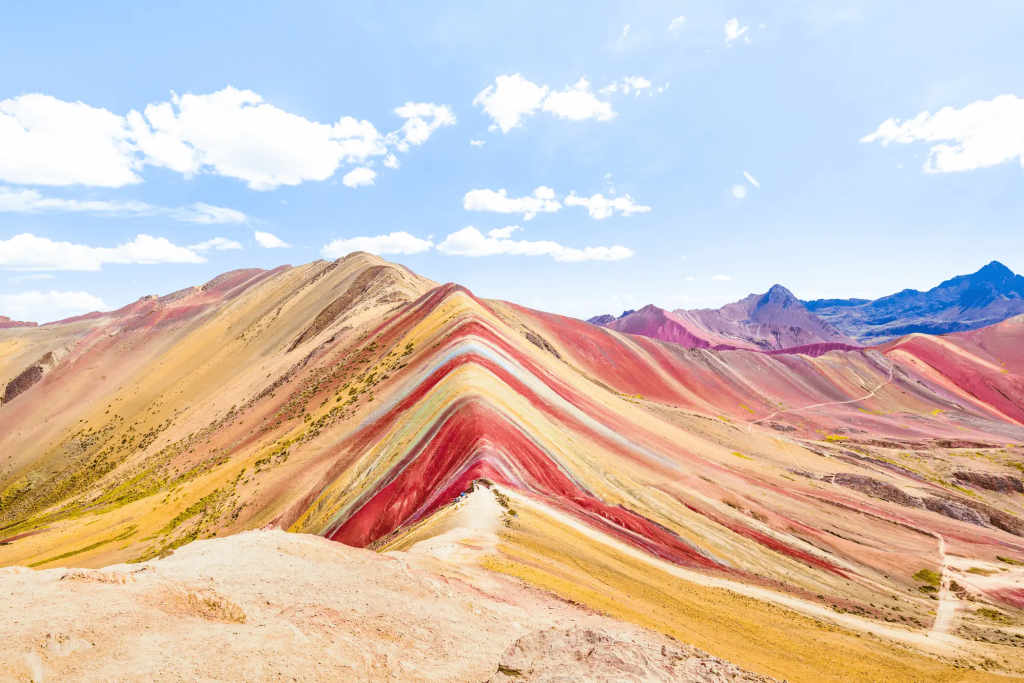
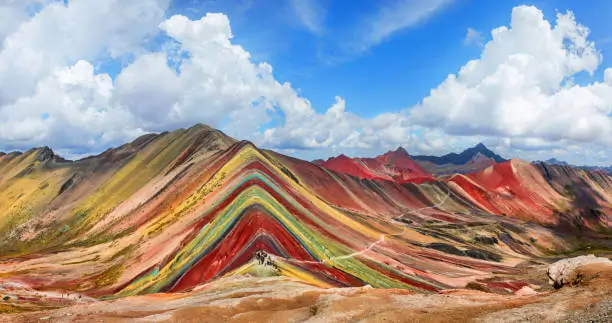
The term Montañas de colores refers to a group of multicolored mountains located in the Peruvian Andes. These mountains display striking layers of red, yellow, green, turquoise, purple, and brown, creating a natural rainbow effect across their slopes.
Unlike painted hills or artificial formations, the Montañas de colores are completely natural. Their vibrant tones come from mineral deposits accumulated over millions of years. Today, they are among the most visited high-altitude attractions in Peru, offering travelers an unforgettable combination of geology, culture, and adventure.
¿How Were the Montañas de Colores Formed?
The formation of the Montañas de colores is the result of a long geological process that began millions of years ago. The Andes mountain range was created by tectonic plate movements that pushed layers of sediment upward from the ocean floor.
Over time, these sedimentary layers accumulated different minerals:
- Iron oxide created red and brown tones
- Sulfur contributed yellow hues
- Copper oxide produced green shades
- Other mineral combinations generated purple and turquoise colors
Once exposed by erosion and climate changes, these colorful layers became visible. The dramatic color contrast we see today is the outcome of natural weathering, wind erosion, and glacial activity at high altitudes.
¿Where Are the Montañas de Colores Located?
The Montañas de colores are primarily located in the Cusco region of southern Peru, within the Vilcanota mountain range. Each mountain has its own unique setting, altitude, and trekking route.
Vinicunca (Rainbow Mountain)
Vinicunca, also known as Rainbow Mountain, is the most famous of the Montañas de colores. It is located approximately 3 hours by road from Cusco, in the district of Pitumarca.
- Altitude: around 5,200 m / 17,060 ft
- Part of the Ausangate mountain circuit
- Surrounded by snow-capped peaks and high-altitude grasslands
Vinicunca is typically reached via a moderate to challenging hike that takes around 1.5 to 2 hours from the trailhead.
Palcoyo
Palcoyo is considered a quieter alternative to Vinicunca. Instead of one single colorful peak, Palcoyo offers a panoramic view of several multicolored mountains.
- Altitude: approximately 4,900 m / 16,076 ft
- Shorter and easier hike
- Less crowded than Vinicunca
Palcoyo is ideal for travelers who want to experience the Montañas de colores with less physical effort.
Pallay Punchu
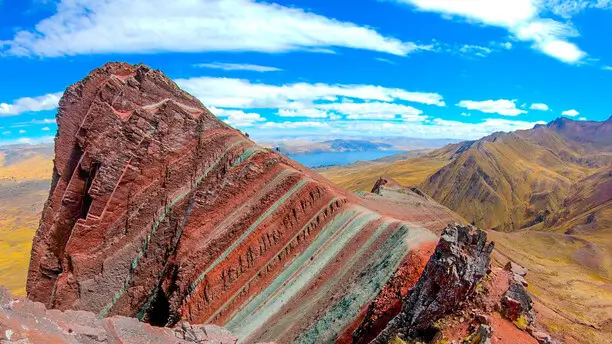
Pallay Punchu is one of the newest and most unique colorful mountains discovered in the region. Its name means “Andean poncho” in Quechua due to its sharp, woven-like patterns.
- Located near the town of Layo
- Altitude: around 4,700 m / 15,420 ft
- Features dramatic, pointed ridges
This mountain offers a more off-the-beaten-path experien
Wilcacunca
Wilcacunca is located near Cusco city and is sometimes called the “Rainbow Mountain of Cusco.”
- Easier access from the city
- Lower altitude compared to Vinicunca
- Suitable for short hikes
Wilcacunca is a great option for travelers with limited time.
¿Why Are the Montañas de Colores So Eye-Catching?
The Montañas de colores are visually stunning due to their rare mineral composition and high-altitude clarity. Here are some fascinating facts:
- The colors appear more intense under direct sunlight.
- Weather conditions can dramatically change the shades.
- Snow occasionally covers parts of the mountains, creating striking contrasts.
- They were hidden under snow for many years and only became widely known in the last decade.
- The surrounding area is culturally significant for Andean communities.
The combination of vibrant geology and remote Andean landscapes makes the Montañas de colores one of Peru’s most photogenic destinations.
¿Which Mountain Should You Choose?
Choosing between the different Montañas de colores depends on your travel style and physical condition.
If you want the most iconic and famous experience, Vinicunca is the top choice. If you prefer fewer crowds and a gentler hike, Palcoyo is an excellent alternative. For travelers seeking something unique and less commercial, Pallay Punchu offers dramatic formations. Wilcacunca works best for short visits and easier access.
Each mountain delivers a powerful visual experience, so the right choice depends on your comfort level and time availability.
¿What Animals Live in These Areas?
The Montañas de colores are located in high-altitude Andean ecosystems, home to fascinating wildlife. While hiking, you may encounter:
- Alpacas and llamas grazing freely
- Vicuñas, a protected wild camelid species
- Andean condors soaring above
- Small rodents adapted to high altitudes
- Native bird species unique to the Andes
These animals thrive in harsh conditions and are part of the traditional Andean landscape.
Prepare for Altitude Sickness
Since the Montañas de colores are located above 4,500 meters, altitude sickness is a real concern. Preparation is key.
Recommendations:
- Spend at least 2 days acclimatizing in Cusco before hiking
- Stay hydrated
- Avoid alcohol before the trek
- Eat light meals
- Walk at a steady pace
- Consult your doctor if you have health concerns
Symptoms may include headache, nausea, dizziness, and fatigue. Proper acclimatization greatly reduces risks.
¿What Should I Bring to the Montañas de Colores?
Preparation is essential for a safe and comfortable experience.
Clothing
Layered clothing is crucial because temperatures vary drastically.
- Thermal base layer
- Warm fleece or jacket
- Waterproof outer layer
- Comfortable trekking pants
- Warm hat and gloves
- Sturdy hiking boots
Temperatures can drop below freezing in the early morning.
Final Thoughts on the Montañas de Colores
The Montañas de colores are more than just colorful landscapes they are a testament to Earth’s geological history and the beauty of the Peruvian Andes. Whether you choose Vinicunca, Palcoyo, Pallay Punchu, or Wilcacunca, each destination offers a unique adventure at the top of the world.
For travelers seeking unforgettable scenery, cultural authenticity, and high-altitude excitement, the Montañas de colores should be at the top of your Peru itinerary. With proper preparation and the right mindset, you will experience one of the most extraordinary natural wonders in South America.
If you are ready to explore Peru’s most vibrant mountains, now is the perfect time to plan your journey. The Andes are waiting.